
How High Should You Hang Your Light Fixtures? A Room-by-Room Guide by DeMasi Interiors
One of the most common mistakes I see in homes, even beautifully decorated ones, is lighting hung at the wrong height. It is a small detail that affects everything: how a room feels, how the light actually functions, and whether a fixture reads as intentional or like an afterthought. Here is a room-by-room breakdown so you can get it right the first time.
DINING ROOM
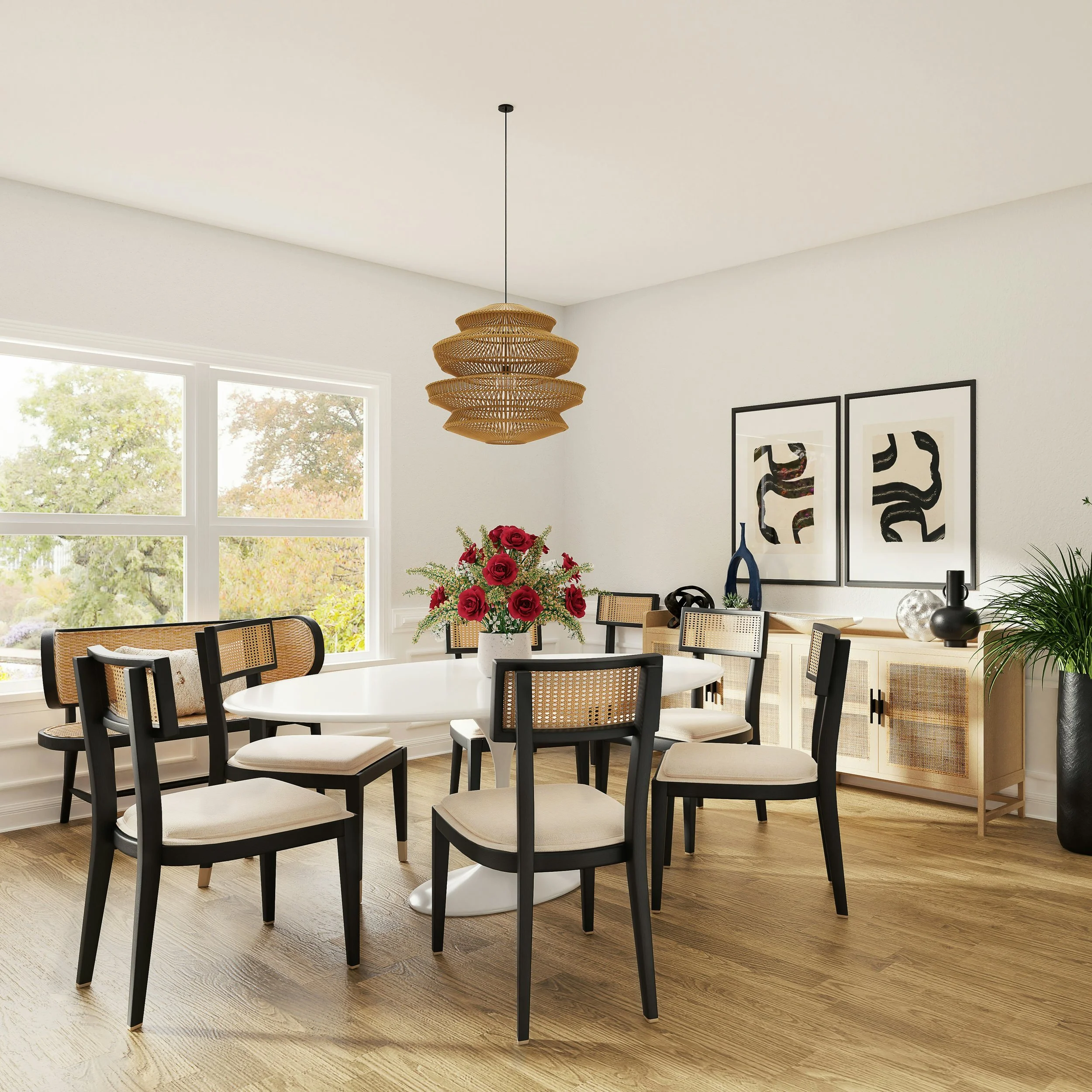
Photo by Spacejoy on Unsplash
The dining room chandelier is one of the most impactful lighting decisions in a home, and height is everything. For a standard 8-foot ceiling, hang the bottom of your fixture 30 to 36 inches above the top of the dining table. For every additional foot of ceiling height above 8 feet, add approximately 3 inches. So a 9-foot ceiling calls for 33 to 39 inches of clearance, and a 10-foot ceiling calls for 36 to 42 inches. The fixture should always feel connected to the table below it, not floating up toward the ceiling.
As for sizing, a good rule of thumb is that your chandelier should be about half to two-thirds the width of your dining table.
KITCHEN ISLAND PENDANTS
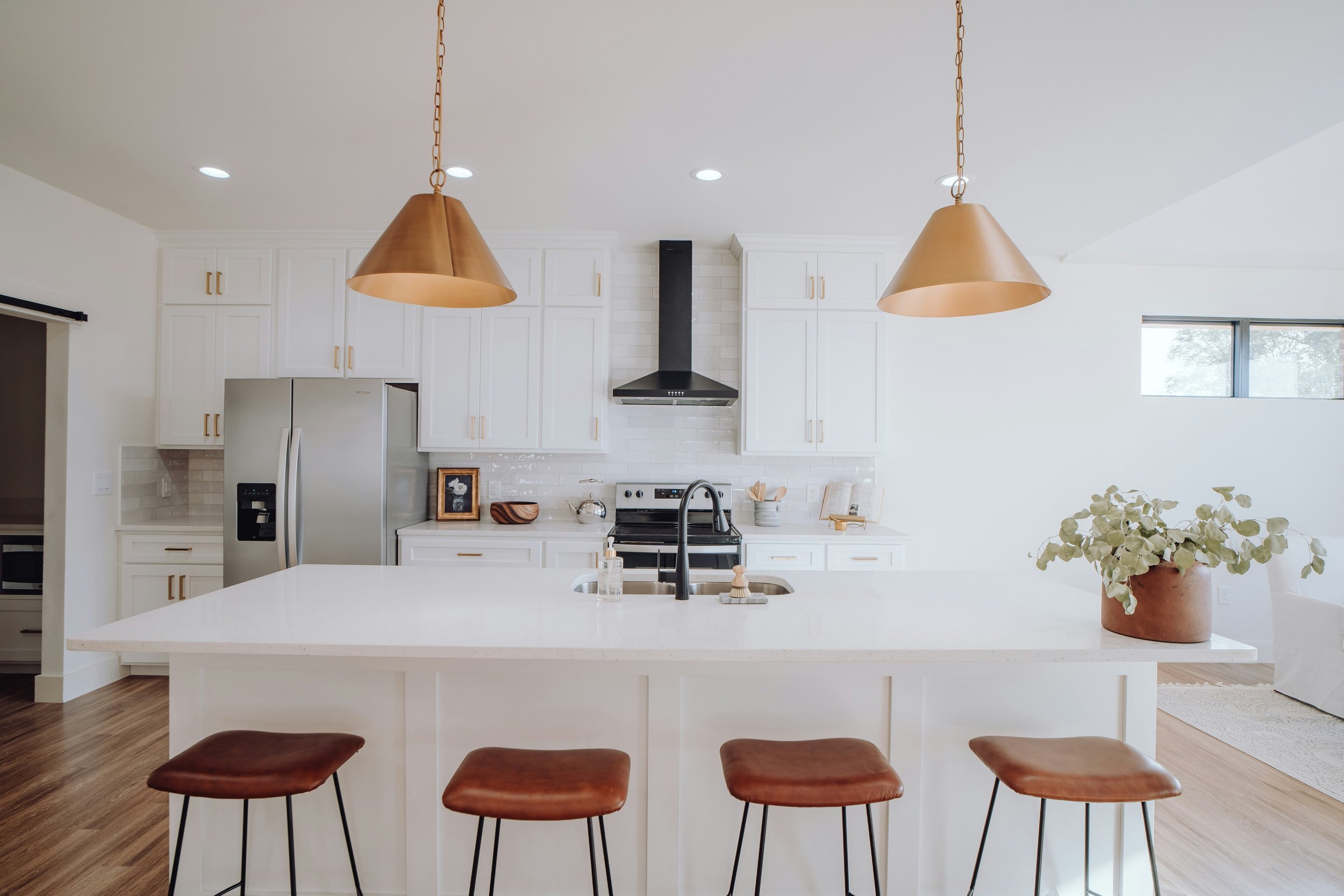
Photo by Zac Gudakov on Unsplash
Pendant lights over a kitchen island should hang 30 to 36 inches above the countertop surface. This gives you functional task lighting without the fixtures sitting so low they block sight-lines across the kitchen. If you are hanging multiple pendants, space them 24 to 30 inches apart from center to center. For a linear pendant or a long single fixture, keep it no longer than two-thirds the length of the island so it stays proportional.
ENTRYWAY & FOYER
In an entry or foyer, the bottom of your light fixture should hang at least 7 feet from the floor to keep clearance comfortable for anyone walking underneath. For a two-story entryway, resist the urge to push the fixture all the way up toward the ceiling. Center it vertically in the space so it feels anchored to the entry below rather than lost up near the roofline. The fixture width should be no wider than half the width of the foyer, and at least 4 feet from any surrounding wall or doorway.
BEDROOM
For a chandelier or pendant in the bedroom, the bottom of the fixture should sit at least 7 feet from the floor. In rooms with standard 8-foot ceilings, a flush or semi-flush mount is often the more practical choice. If you are using bedside pendants in place of table lamps, hang the bottom of each pendant approximately 28 to 30 inches above the top of the mattress, right where you need it for reading without the fixture feeling too low.
BATHROOM VANITY

Photo by Zac Gudakov on Unsplash
Bathroom vanity lighting is one of the most functional decisions in the home because it directly affects how you look getting ready every day. For a light bar mounted above the mirror, position the center of the fixture approximately 75 to 80 inches from the floor. For wall sconces mounted on either side of the mirror, 60 to 65 inches from the floor to the center of the sconce is the sweet spot. Side sconces at eye level provide the most even, flattering light for everyday tasks like applying makeup or shaving, since the light comes at face level rather than casting shadows from above.
LIVING ROOM
The living room calls for layered lighting at multiple heights rather than relying on one overhead fixture to do everything. For a central chandelier or pendant, the bottom of the fixture should hang at least 7 feet from the floor. For sizing, add the length and width of the room in feet and use that number as the approximate diameter of your fixture in inches. So a 12 by 14 room would call for a chandelier roughly 26 inches in diameter. Floor lamp shades should sit 40 to 42 inches from the floor, and table lamp shades should be at roughly seated eye level, around 38 to 42 inches from the floor.
WALL SCONCES
Wall sconces throughout the home follow a general standard of 66 to 72 inches from the floor to the center of the fixture. In hallways, lean toward the higher end of that range to keep clearance comfortable. In a bedroom or beside a reading chair, you can go slightly lower to bring the light closer to where it is actually being used.
THE BOTTOM LINE
Getting your lighting heights right is one of those details most people never consciously notice, but immediately feel when something is off. These guidelines exist because they work in the vast majority of homes, and they are the starting point I use with every client. That said, every home is different. Ceiling heights, room proportions, the scale of your furniture, and how you actually use a space all factor into where a fixture should ultimately land.
If you are planning a renovation or redesign and want a second set of eyes on your lighting plan, that is exactly what I am here for.
DeMasi Interiors offers full service interior design for homeowners across Rhode Island